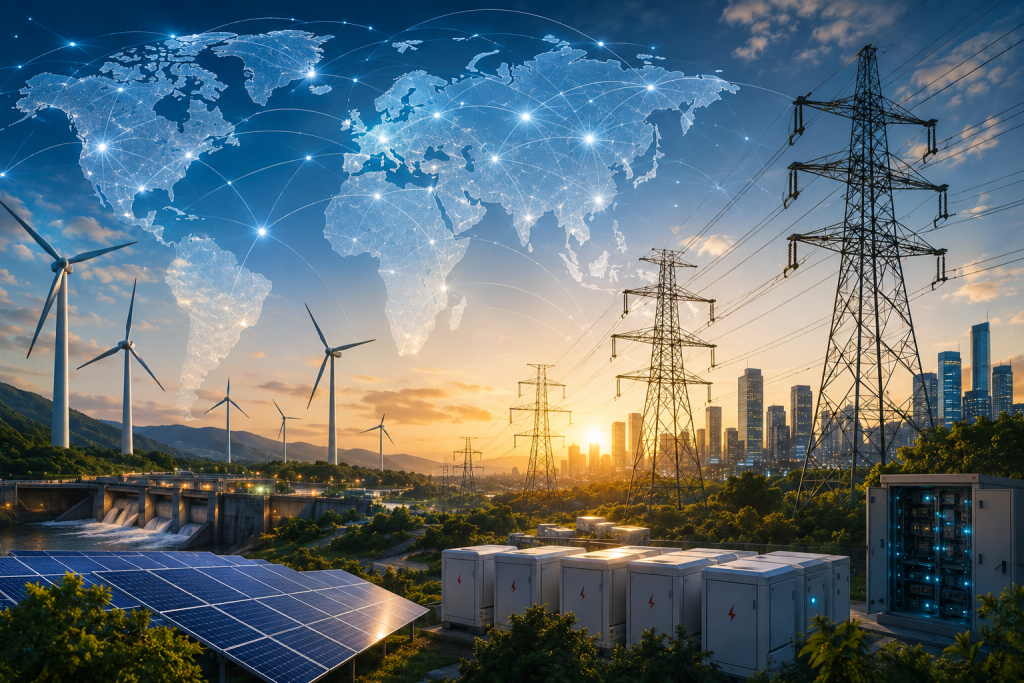
The global energy sector is entering a new era in which electricity has become the center of economic transformation, industrial development, and geopolitical strategy. As countries accelerate digitalization, electrification, and decarbonization efforts, the demand for reliable and sustainable electrical energy continues to grow significantly. Electricity is no longer viewed merely as a public utility, but as a strategic foundation that supports national competitiveness, industrial productivity, transportation systems, and technological advancement.
In recent years, geopolitical tensions have highlighted the vulnerability of global energy systems, particularly in relation to fuel supply chains and energy security. Conflicts involving major oil and gas producing regions, trade restrictions, and global commodity disruptions have pushed many countries to reduce dependence on imported fossil fuels and strengthen domestic electricity generation capabilities. As a result, governments worldwide are increasingly investing in power infrastructure, renewable energy, transmission networks, and energy storage systems to ensure long-term electrical supply stability.
The transition toward cleaner electrical energy is also accelerating due to global climate commitments and sustainability targets. Renewable energy sources such as solar, wind, hydro, geothermal, and biomass are becoming essential components of national electricity strategies. Many countries are shifting from centralized fossil fuel-based systems toward more diversified and decentralized electricity generation models. This transformation is expected to reduce carbon emissions while simultaneously improving energy independence and resilience against geopolitical uncertainty.
At the same time, electrification is reshaping multiple industries across the global economy. The rapid growth of electric vehicles (EVs), data centers, smart manufacturing, and digital infrastructure is significantly increasing electricity consumption worldwide. Industries that previously relied heavily on direct fossil fuel consumption are now transitioning toward electricity-based systems to improve efficiency and reduce emissions. This trend is creating both opportunities and challenges for electricity providers, regulators, and infrastructure developers.
Technology plays a critical role in supporting the future of electrical energy systems. The integration of artificial intelligence, smart grids, advanced metering systems, and real-time monitoring technologies is improving efficiency, reliability, and operational visibility across power networks. Modern electricity systems are becoming increasingly interconnected and data-driven, enabling faster decision-making, predictive maintenance, and more efficient energy distribution. However, increased digitalization also creates new cybersecurity risks that must be carefully managed to protect critical national infrastructure.
Another important challenge in the electrical energy transition is the growing competition for strategic minerals required for batteries, power infrastructure, and renewable technologies. Materials such as lithium, nickel, copper, and rare earth elements are becoming increasingly important in supporting battery storage systems, electric vehicles, and renewable energy equipment. Countries with strong access to these resources are expected to play increasingly strategic roles in the future global energy ecosystem.
For developing economies, the transition toward sustainable electrical energy presents a complex balancing act between affordability, accessibility, and environmental responsibility. Many emerging countries continue to prioritize industrial growth and economic expansion, which require stable and affordable electricity supply. Therefore, energy transition strategies must consider local economic conditions, infrastructure readiness, and long-term development objectives to ensure that sustainability goals remain achievable without slowing economic progress.
In addition, the modernization of electricity infrastructure requires substantial investment and stronger collaboration between governments, state-owned enterprises, private investors, and financial institutions. Large-scale investments in transmission systems, renewable projects, battery storage, and smart grid infrastructure will become increasingly necessary to support future electricity demand. Financial discipline, regulatory certainty, and effective governance will therefore become critical success factors in attracting long-term investment into the power sector.
Looking ahead, electrical energy will become one of the most strategic sectors shaping the future global economy. Countries and companies that successfully build resilient, sustainable, and technologically advanced electricity systems will gain stronger economic competitiveness and energy security advantages. In an increasingly uncertain geopolitical environment, the ability to ensure reliable electrical energy supply while managing sustainability and affordability challenges will define the future resilience of nations and industries alike.
Ultimately, the transformation of electrical energy is not simply a technological evolution — it represents a broader global shift in how societies produce, distribute, and consume energy. The future will belong to organizations and nations that can adapt quickly, embrace innovation, strengthen infrastructure resilience, and maintain a balanced approach between economic growth, environmental sustainability, and geopolitical stability.